New Study Highlights the Power of Heart Scans

A new study published in the latest issue of the medical journal Lancet shows that a CT Heart Scan is a better predictor of heart attack risk than cholesterol levels or C-Reactive Protein.  Heart Scans provide a direct look at the coronary arteries to see if there is plaque developing that can lead to heart attacks.  Cholesterol and C-Reactive Protein levels are “risk factors” for heart disease but only give a rough indication of whether you might already have plaque.

If a CT Heart Scan shows that you have coronary artery disease, regardless of your cholesterol level or C-Reactive Protein, treatment can be started with lifestyle changes or medication to help lower your risk.  If there is no disease present then, even though your cholesterol level or C-Reactive Protein level may be elevated, your risk is so low that treating your cholesterol level with medication may not be justified.

To learn more about how a CT Heart Scan can help you find out if you are at risk visit our website at www.ThePLC.net.  You can also see the latest on Heart Scans at “Will You Have a Heart Attack?- These Tests Might Tell” at CNN.com.

David A Fein, MD
Medical Director
Princeton Longevity Center

Posted in Medical News | Tagged , , , , , , , | Leave a comment

Healthy Travels

Summer is synonymous with vacation, relaxation and fun in the sun. However, reaching your favorite destination usually requires travel by plane, car or train. Many of my patients at PLC report that they travel a great deal for work or pleasure, especially during the summer months. I noticed a pattern with most of these travelers; erratic eating patterns and consequential weight gain. While a tropical getaway can do wonders for your mental and physical health, many of us know all too well that healthy eating sometimes goes out the window when traveling to and from our destinations (not to mention the diet sabotage that occurs when we are on the vacation). Luckily, when it comes to healthy travel, the TSA has our back by providing better food options before we board our plane, and airlines snacks have improved in nutritional quality (they are also perfect portions!)

Here are my tips to keep your eating habits on track while traveling:

– Try to avoid eating at first place you find in the airport or train station. Take your time to find the healthiest options. It’s there, I promise

– Look for filling foods such as whole grains, fruits, vegetables and protein-rich items to prevent over eating when you reach your destination. A candy bar will fulfill your hunger in the moment but will leave you ready for more food within 30 minutes.

– Avoid completely change your eating habits because of the stress or excitement of vacationing. Maintaining a healthy diet and staying motivated when trying to lose weight can easily get unraveled by the change in your daily routine.

– Avoid hitting the bar before you travel. Travel especially by plane can cause dehydration, which can cause us to overeat out of thirst rather than true hunger. Alcohol increases this susceptibility to dehydration and can lead to poor judgment when it comes to food choices and portion control.

– Before your flight, avoid splurging on a 500 calorie pre-wrapped muffin in the airport because you need something portable for the flight. Look for fresh fruits or a yogurt. These are just as quick, easy, and portable.

– Avoid heavily salted items like salted nuts, fast food or potato chips before a flight. This can increase risk of painful swelling in your legs and feet that can occur when sitting for long periods of time.

– Enjoy eating out while on vacation, but don’t feast like it’s your last supper. There’s nothing wrong with eating outside of your usual diet while away from home and in new territory, but you still have to come back in the same body. If you leave for vacation expecting to put weight on, then you probably will!

– Watch your portions and stay consistent with your junk food rules.

– Keep things familiar. If you never tried a white chocolate mocha latte at Starbucks at home, do you really need to have one in Puerto Rico?

Tasty eats and safe travels!

Posted in Medical News | Leave a comment

Red Meat Hurts More than Just Your Heart

It’s not just high sugar foods like cookies, cakes and white bread that are associated with increased risk of diabetes. Evidence has shown that red meat intake is directly linked to elevated diabetes risk; the more red meat in the diet, the greater the risk. Dietitians and other health professionals always emphasize that red meat should be eaten less frequently than lower fat meats to prevent HEART disease. But often, there is no mention of how red meat’s nutritional components can impact blood sugar and diabetes risk.
Red meat is high in saturated fat and cholesterol, both of which impact blood cholesterol, body weight and promote inflammation. These same negative effects are attributed to the development of diabetes! So it’s time to recognize the total body impact of excessive red meat intake.

A recent article describes the results of a large meta-analysis study, revealing how processed and unprocessed red meats impact diabetes risk. See the link below to read the article.

Recommendations: limit red meat intake to no more than once per week. This includes high fat processed meats such as salami and pepperoni. Instead, eat a variety of protein- rich foods like  chicken, turkey, beans, low-fat dairy, fish and nuts to help keep you full and healthy.

http://consumer.healthday.com/Article.asp?AID=655704


This prospective study was included in the meta-analysis described in the above article:

http://care.diabetesjournals.org/content/27/9/2108.long

Posted in Medical News | Leave a comment

Visceral Fat Strikes Again

A recent article on healthday.com discusses the results of a recent study showing that certain ethnic groups are predisposed to develop more visceral fat as compared to other ethnic groups. In particular, the researchers found that South Asians were at the greatest risk. The research was conducted by Canadian researchers and was reported in the July 28 online edition of the journal PLoS ONE.

About Visceral Fat:

Visceral fat, the adipose tissue that surrounds the organs, is closely linked to metabolic risk factors such as obesity, hyperglycemia and insulin insensitivity, and lipid abnormalities. In fact, increased visceral fat is typically more predictive of health risk and outcome than common blood tests, such as total cholesterol, LDL and HDL cholesterol and fasting blood glucose. Many medical professional avoid discussing visceral fat and its role in overall health with patients because most doctors are not knowledgeable about how to measure visceral fat and, if elevated, how to recommend treatment for patients. At the Princeton Longevity Center, visceral fat is measured using precision scanning to closely look inside the abdominal cavity to assess total visceral fat that has accumulated. Diet, exercise, age and genetics all play a role in who will develop visceral fat.

Dietitian’s Perspective:

Diet plays a large role in the development of visceral fat. A high carbohydrate diet, especially one that is concentrated in simple sugars (sugar found in baked goods, candy and white starches) leads to faster and greater development of visceral fat. Choosing foods based on their glycemic index (low glycemic index is recommended) is the best way to prevent the development of visceral fat. Not surprisingly, foods that are considered low glycemic index include high fiber cereal, beans, nuts, most non-starchy vegetables, and fruits such as cherries and grapefruit.

Click the link below to read the article:

http://consumer.healthday.com/Article.asp?AID=655285


Posted in Medical News | Leave a comment

Fabulous Summer Fruits

Bored of the usual apples and bananas? Summer is a great time to perk up your taste buds with a variety of delicious summer fruits. Loaded with antioxidants and dietary fiber, fruits such as strawberries, peaches, plums and kiwi are ripe and ready to be eaten as we migrate from the couch to the beach. Naturally sweet and refreshing, these fruits are great substitutes for higher calorie desserts, or they can be added to any meal of the day to boost your immune system, reduce inflammation, and protect your vision.

Here are a few of Mother Nature’s
most nutrient dense and flavorful summer fruits:

Strawberries: contain numerous antioxidants such as polyphenols, which can help maintain normal blood sugar. They are an excellent source of Vitamin C, manganese, dietary fiber. The antioxidant anthocyanin, which give strawberries their deep red color, are a very potent cancer protector.

Blackberries: one of the most antioxidant-rich foods on the planet! They contain the same type of antioxidants found in strawberries and are also a rich source of Vitamin C and fiber. As for calories, 1 cup contains just 75 calories!

Watermelon: A great sources of Vitamin A, important for vision and eye health. It also contains a variety of B Vitamins such as Vitamin B6, which is needed for energy production. Some research has shown that the antioxidants in watermelon can help reduce asthma symptoms. This fruit is over 90% water, so it will keep you hydrated while out in the hot sun!

Figs: A great sources of calcium and potassium, figs are helpful to maintain healthy blood
pressure and prevent heart disease. This fruit is also a good digestive aid to reduce constipation which is linked to colon cancer prevention. These sweet gems naturally contain tryptophan, the same neurotransmitter found in turkey that is infamous for making you sleepy, allowing for a better night’s sleep.

Peaches: A delicious summer treat with a stellar nutrition profile. Containing Vitamin A, B1, B2, B6, potassium, phosphorus, magnesium and calcium (just to name a few!), peaches
rank high on the list of the world’s most powerful food sources of antioxidants.  Whether they are fuzzy or bald, grab a peach once a week and skip your regular multivitamin supplement.

Ways to eat your favorite summer
fruits:

  • Add raspberries to Greek yogurt
  • Blueberries with cottage cheese
  • Dip strawberries into melted dark chocolate for a
    savory dessert
  • Grill peaches outside and add fresh whipped cream
    for a flavor boost
  • Blend yogurt, milk and berries into smoothies as
    a light meal or snack
  • Serve cut melon with a fat-free yogurt and agave
    nectar sauce for dipping
  • Add berries, peach slices and mandarin oranges to
    your favorite salad
  • Make homemade fruit spreads (jelly) with your
    favorite berries
  • Pair a piece of fresh fruit with a portion of
    nuts for a balanced snack
  • Top cooked berries or peaches on angel food cake
    for added sweetness
  • Add sweetness to chicken or pork entrees with
    diced mango or papaya

Gail Wikler, RD, CDN

Princeton Longevity Center, Shelton CT


Posted in Medical News | Leave a comment

Losing The Danger of Being Fat Without Dieting

Obesity is a growing problem in the USA with more than 60% of the population now classified as overweight and more than 30% are obese.  We tend to think of overweight people as destined to be at high risk for chronic health problems.  But recent studies have highlighted that weight alone often does not determine future health.  In fact, healthy people can come in all shapes and sizes.

If we compare a group of thin people to a group of obese people it is very likely that we will find more people with high blood pressure, high cholesterol, diabetes, arthritis and vascular disease in the obese group.  However, we will also find people in the thin group who suffer from these conditions and many in the obese group who are still in excellent health.   At Princeton Longevity Center we frequently see patients who are “obese” based on both weight and body composition analysis (percent body fat) yet they have no current medical problems.

If you are overweight the key to staying well may be your level of physical fitness.

The death rate for men and women who are thin but not physically fit is more than twice as high as for obese men and women who are fit.  Across every level of body size, unfit people have a much higher death rate than those who are fit.

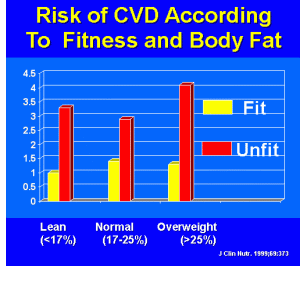
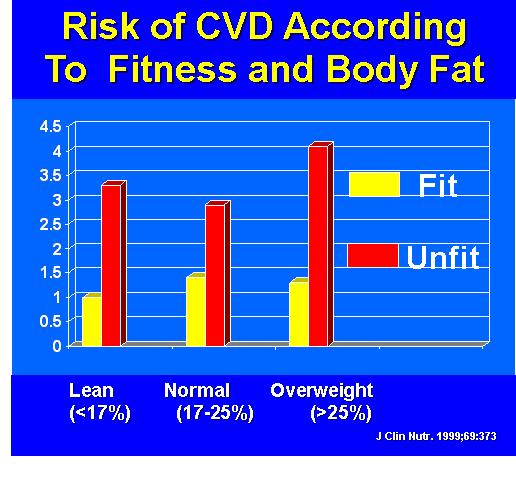
The graph below, from a study in the Journal of Clinical Nutrition, shows the risk of developing cardiovascular disease (CVD) according to Body-Mass Index (BMI), a common measure of weight versus height.  In those who were unfit, the risk of CVD was higher with increased weight. For patients who stayed fit being at a higher weight did not raise their risk for CVD compared with those were fit and at normal weight. In fact, the overweight fit patients were at much lower risk than those at a normal weight who did not stay fit.  Overall, fitness had a much bigger impact than weight.
Body Fat and CVD Risk

Part of the explanation may lie in where fat can accumulate.

There are different kinds of body fat.  Subcutaneous fat, the fat that you can pinch under your skin, is metabolically benign.  You may not like the way it looks but it does not appear to significantly increase your risk for the health problems we typically associate with obesity.

On the other hand, visceral fat, the fat found inside the abdomen and chest around the internal organs, is very metabolically active.  Visceral fat produces substances that promote inflammation, raises blood pressure and triglycerides, lower HDL levels, change hormone levels and interfere with control of blood sugar.

Measuring your weight or your BMI does not tell you whether your fat is subcutaneous or visceral fat.  The only accurate way to measure visceral fat is with a CT or MRI scan.

Visceral fat appears to result from a genetic predisposition combined with a high carbohydrate diet and a sedentary lifestyle.  The more you exercise, the less likely you are to have visceral fat.  Fit overweight people are more likely to carry their extra weight as the much less harmful subcutaneous fat.

Many of us are frustrated with constant diets and trying to lose weight that just won’t stay off.  While it may not get you back into the clothes you wore when you were 20, focusing on getting at least 150 minutes per week of exercise may help you to avoid many of the health problems that can come with being overweight.  Even if you don’t lose weight, staying active will be an excellent investment in the quality of your future years.

David A Fein, MD
Medical Director
Princeton Longevity Center

Posted in Medical News | Tagged , , , , , , , , | 2 Comments

New PLC Recipe: White Bean, Tomato, & Green Bean Salad

Planning a barbecue this weekend? Add some cancer-fighting and cholesterol-lowering fiber to the menu with this refreshing and delicious bean based salad!

White Bean, Tomato, and Green Bean Salad
Serves: 4
Dressing:
1 tablespoon fresh lemon juice
1 tablespoon balsamic vinegar
1 tablespoon extra virgin olive oil
1/4 teaspoon freshly ground black pepper
1 garlic clove, minced

Salad:
1 pound of cut green beans
1 cup chopped tomato
1 tablespoon chopped fresh dill
1 (15-ounce) can cannelloni beans, rinsed and drained

 Directions:

To prepare dressing:

1. Combine all ingredients & stir with a whisk

 To prepare salad:

  1. Place green beans into a large saucepan of boiling water; cook 5 minutes
  2. Drain and then put beans into ice water; drain quickly. Place beans in a large bowl
  3. Add tomato, dill, and cannelloni beans; toss to combine
  4. Add dressing & toss gently to coat
  5. Cover and chill before serving

Each 1 ½ cup serving provides (makes 4 servings): Calories 170, Fat 4g, Saturated Fat 0.5g, Protein 9g, Cholesterol 0mg, Carbohydrate 28g, Fiber 9g, Vitamin A 25% DV, Vitamin C 35% DV, Calcium 10% DV, Iron 20% DV

Posted in Healthy Recipes, Nutrition | Tagged , , | Leave a comment

Top 5 Fitness Related Injuries and how to avoid them

Top 5 Fitness Related Injuries and how to avoid them

By: Chris Volgraf, CSCS

Here we are coming down the home stretch of the summer, with August now upon us.  There is nothing worse than experiencing success with your fitness program, only to have it sabotaged by a troublesome injury.  Here are 5 of the most common injuries we see at the PLC and what you can do to prevent them. Please feel free to do an on-line search for the italicized exercises I have recommended to prevent or help treat each injury.

  1. Low Back Pain—undoubtedly the number 1 complaint of incoming patients is low back pain.  Often is the case one can avoid low back pain by placing emphasis on core stability, abdominal and glute strength and hip flexor and low back flexibility. (Here are a few exercises to search online—Supine Pelvic Tilts, Planks, Ball Crunches, Hip Flexor Stretch, Prayer Stretch and Lying Knee to Chest Stretch)
  2. Shoulder Pain—the shoulders have climbed the ranks of the injury list quite rapidly with the increasing number of desk jobs around the world.  Many shoulders have begun to internally rotate from tightness in the chest and lats and our upper middle back muscles that stabilize the shoulder blades have become incredibly weak.  If the shoulders are already internally rotated, you will have a lack of mobility in your shoulder (especially in external rotation) and you stand a greater chance of injury when raising anything above your head, performing any throwing or swinging motion, etc. You also have a greater likelihood of impingement which is when the tendons of the rotator cuff become irritated, inflamed or pinched. Strengthening the scapular stabilizers and increasing the flexibility of the chest and lats will greatly decrease the likelihood of injury to the shoulders and improve your posture at the same time! (Exercises to help—TYLW on ball, Bent Over Row, Twisted Prayer Stretch and Pec Minor Door or Corner Stretch)
  3. Achilles Tendonitis—with the increasing popularity of high intensity exercise, Achilles tendonitis has been one of the more popular injuries out there. The two most common causes are ramping up the intensity too high or too quickly (overuse/overtraining injury) or lack of mobility in the ankle from tightness in the calf/gastrocnemius and soleus muscles. We can greatly diminish the occurrence by slowly progressing intensity and working on ankle mobility with stretches for the calf area. (Exercises to help—Gastroc Stretch, Soleus Stretch and Rest, Ice Compression and Elevation)
  4. Plantar Fasciitis—the summer is always busy season for plantar fasciitis.  How many of you our there walk around in bare feet, flip flops or sandals? Do you often get pain from sporting your summer fashion pieces…then plantar fasciitis is the likely culprit.  Plantar fascia is a connective tissue that supports the arch of the foot and can suffer micro tears or adhesions from overuse during exercise or improper footwear. Stretching and massaging the plantar fascia and stretching the calves helps tremendously. (Exercises to help—Plantar Fascia Stair Stretch, Calf Stretch, Soleus Stretch and Golf/tennis ball Plantar Fascia massage)
  5. Tennis Elbow—whether you are tennis player or not, anyone can fall victim to Tennis Elbow or Lateral Epicondylitis.  Tendonitis is an overuse injury, so repetitive motions can to cause tendonitis anywhere in the body, especially in the elbow.  Frequent exercisers, tennis players and golfers often complain from Tennis Elbow.  Strengthening the muscles in the forearm and massaging the area of discomfort are the best way to prevent and treat Lateral Epicondylitis. (Exercises to help—wrist curls and extensions, pronating and supinating the hand with stable elbow, radial and ulnar deviation and massaging the area of discomfort).
Posted in Getting Fit | Tagged , , , , , | 1 Comment

Stretching before exercise – Time is better spent elsewhere?

Static stretching before exercise is still showing no real benefit?  Dynamic warm-ups and gradually increasing the intensity is the best way to prepare for a workout.   Stretching after exercise or after a warm-up might be more effective.  See our expert article:

You’re Getting Warmer: The Proper Way to Warm-up and Stretch with Exercise

New York Times latest stretching article:

To Stretch or Not to Stretch

Posted in Getting Fit | Leave a comment

The Pain-Killer That Could Actually Kill You

The maker of Tylenol (Acetaminophen) has just announced it is changing its labeling to limit the recommended daily dose to just 3,000 mg because of concerns about possible liver toxicity.

Acetaminophen is so commonly used that we practically take its safety for granted.  But Acetaminophen overdose is one of the most common poisonings worldwide.  An overdose can occur from a single very large dose.  More commonly, accidental overdoses result from taking multiple doses over a period of time.

 Acetaminophen toxicity is the most common cause of acute liver failure in the USA and it is the second most common cause of liver failure requiring a liver transplant.  More than 200 people die each year in the US from Acetaminophen overdose, many of those were inadvertent.  In one study, as many as 27% of patients with Acetaminophen-induced liver failure died.  Fortunately, if recognized in time, most people who develop toxicity will survive with proper supportive care.

Acetaminophen is found in a variety of over-the-counter and prescription medications.  While the label with the tablets I was taking advised a dose every 4-6 hours, it also clearly stated that you should not take more than 8 in a 24 hour period.  Extra-strength Acetaminophen products are usually 500 mgs per tablet.  So, 8 tablets equates to a 4,000 mg per day limit.

The problem is three-fold.

  1. When the relief seems to last only about 4 hours, it is very tempting to take 6 doses or more in a day.
  2. Acetaminophen is found in so many products that unless you check the labels carefully, you may be taking a much bigger dose than you realize.  That over-the-counter cold remedy may not only have something for congestion and cough, it may have more Acetaminophen in it, too.
  3. Other factors can lower your body’s ability to handle Acetaminophen and result in poisoning even when used properly.

Acetaminophen poisoning results from the way the body metabolizes the drug.  Acetaminophen is broken down by the liver.  Normally, the liver utilizes a substance called Glutathione to safely process Acetaminophen. Once the liver runs out of Glutathione it switches to a different pathway for breaking down Acetaminophen and this pathway causes severe toxicity that can quickly result in liver failure.  This means that your liver can handle a lot of Acetaminophen without any problem but once it reaches tolerance, just a bit more can be very dangerous.

People with underlying liver problems, chronic medical problems or who use alcohol or other medications may have an even lower tolerance for Acetaminophen

When properly used Acetaminophen can be safe and indispensable for treating a wide variety of ailments.  A few simple steps can help to protect you from accidental poisoning.

  • Check your labels.  Make sure that you add up all the Acetaminophen you are taking throughout the course of the day.
  • Limit your total daily dose to no more than 3,000 mg.  If you have underlying medical problems or usually consume more than 3 alcohol drinks per day, consult with your doctor before using Acetaminophen to determine if you should keep your maximum daily dose lower.
  • Do not use Acetaminophen for more than 7 consecutive days even if you are within the total daily dose limit.  Once your liver runs out of Glutathione, even small amounts of Acetaminophen can be dangerous.   If you need to take pain medication for longer, consult with your doctor.

By: David Fein, MD
Medical Director
Princeton Longevity Center
Posted in Medical News | Tagged , , , , | 1 Comment